Resources from the field
To help understand the rural-urban divide
Articles and Reports
-
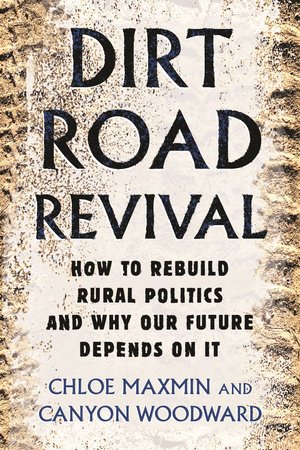
“What Democrats Don’t Understand About Rural America”
By Chloe Maxmin and Canyon Woodward -
“The Best Way for Democrats to Win Working-Class Voters”
By Matt Morrison -
“Bette Midler’s Contempt Fuels Right-Wing Populism”
By Erica Etelson and Anthony Flaccavento -
“Why Democrats Keep Losing Rural Counties Like Mine”
By Bill Hogseth -
“Organizing on the coasts won’t save the planet”
By Jane Kleeb -
“If Declining Towns ‘Deserve to Die’, Where Should Their Residents Go?”
By Brian Alexander -
“The Lies We’re Told About Appalachia”
By Ivy Brashear -
“What Democrats Still Don't Get about Winning Back the White Working Class”
By Andrew Levison -
“How Capitalism Underdeveloped Rural America”
By Mark Edelman -
“If Progressives Don’t Try to Win Over Rural Areas, Guess Who Will”
By George Goehl -
“To get rural Americans involved in climate crisis, see them for who they are”
By Michelle Nijhuis -
“Factory Towns”
By Richard Martin -
“The Gentrifcation of the Rural West”
By Ryanne Pilgeram -
“How Democrats Gave Up on Rural America”
By Nick Bowlin -
“Democratic Elites Don’t Understand the Class Culture Gap”
By Joan C. Williams -
“What Liberals Get Wrong About ‘White Rural Rage’ — Almost Everything” by Nicholas F. Jacobs
Partners consulted in the founding of RUBI
-

Arlie Hochschild
Arlie has long taught sociology at U.C. Berkeley. Her most recent book is Strangers in Their Own Land: Anger and Mourning on the American Right, and for the last four years she has been doing research in Appalachia.
-

Matt Morrison
Matt Morrison is the Executive Director of Working America, AFL-CIO. He is a leading political practitioner with experience working in over 500 elections throughout his career. Most recently, Working America has achieved a 76 percent win rate in the 87 competitive elections it has worked in since November 2016.
-

Cynthia Wallace
Cynthia Wallace is the Executive Director and co-founder of the New Rural Project. Cynthia was the 2020 Democratic Nominee for North Carolina’s 9th Congressional District and is an appointed member of the NC State Banking Commission. She was born and raised in rural southeastern Georgia, where all of her grandparents were farmers. She has lived in Atlanta, Jacksonville and now Charlotte. She knows first hand the urban and rural life.
-

Chloe Maxmin
Chloe Maxmin, hailing from rural Maine, is currently 29 years old and a Maine State Senator. She was elected in 2020 after unseating a two-term Republican incumbent and (former) Senate Minority Leader. In 2018, she served in the Maine House of Representatives after becoming the first Democrat to win a rural conservative district. She is the youngest woman ever to serve in the Maine State Senate. IG: @chloe.maxmin
-

Jennifer Silva
Jennifer M. Silva is a sociologist at the O’Neill School of Public and Environmental Affairs at Indiana University. She is the author of We’re Still Here: Pain and Politics in the Heart of America.
-

Kal Munis
Kal Munis, a political scientist at Auburn University, is a leading scholar on the urban-rural divide and former pollster for red state Democrats. He was part of the successful polling and strategic messaging effort that helped turn Georgia blue in 2020. Kal is a first-generation college graduate with family roots in ranching and mining. He leverages his deep Montana roots and connections to the rural west to develop and maintain a cutting-edge academic research agenda and a series of strategic political proposals aimed at courting rural voters on the basis of localized and progressive economic policies.
-

Canyon Woodward
Canyon Woodward is the co-author of Dirt Road Revival: How to Rebuild Rural Politics and Why Our Future Depends On It. He was born, raised, and homeschooled in the Appalachian Mountains of rural North Carolina and the North Cascades of Washington State. He was the campaign manager for Chloe Maxmin’s successful 2018 and 2020 campaigns.
-

Michael Shepherd
Michael E. Shepherd, PhD. is a Postdoctoral Fellow at Vanderbilt University. His research focuses on how marginalized social groups affect and are affected by public policies, especially surrounding health care.
-

Heidi Binko
Heidi Binko is the co-founder and executive director of the Just Transition Fund, where she is responsible for the design and overall strategic direction of the organization. With more than 17 years of philanthropic experience on climate, coal, and energy issues, Heidi has worked with coal communities throughout the US and internationally in Australia.
-

Luke Mayville
Luke Mayville is Co-Founder and Director of Reclaim Idaho, a grassroots organization that spearheaded Idaho's 2018 ballot initiative to expand Medicaid coverage to over 100,000 Idahoans. Most recently, Reclaim Idaho won a landmark case in the Idaho Supreme Court that enshrined the ballot-initiative process as a fundamental right in the state of Idaho. Luke was listed by Idaho Business Review among the "Power 25" leaders in Idaho's healthcare sector and he received the 2019 Advocacy Award from the Idaho Academy of Family Physicians.
-

Helen Probst Mills
Helen Probst Mills recently co-founded the New Rural Project, a non-profit which focuses on making sure that the voices of rural young people and marginalized residents are heard. Helen was proud to be the 2018 and the 2020 Democratic Nominee for North Carolina’s 25th State Senate District. An attorney by background, Helen was recently reappointed to a second term on the Board of Trustees of the Sandhills Community College. Born and raised in New York City by a single mother, Helen believes that the pitting of rural vs. urban is a construct that serves neither community well.
-

Jefferson Cowie
Jefferson Cowie, a professor of history at Vanderbilt University, studies US working-class history and politics. His books include Stayin’ Alive: The 1970s and the Last Days of the Working Class and the Pulitzer-winning Freedom’s Dominion: A Saga of White Resistance to Federal Power.
-

Sarah Lloyd
Sarah Lloyd farms with her husband Nels Nelson and his family on the 450-cow Nelson dairy farm outside Wisconsin Dells. She serves in leadership in a number of organizations including; Wisconsin Farmers Union, Our Wisconsin Revolution and the Wormfarm Institute, including collaboration on the Rural-Urban Flow initiative. Sarah was a candidate for Congress (WI CD-6) in 2016. Sarah works off-farm for the University of Wisconsin and the University of Minnesota on understanding and enacting agroecological transformation.
-

Paul Kendrick
Paul Kendrick is the executive director of Rust Belt Rising, a non-profit which helps Democrats be the party of all working people by offering free training on connecting effectively with voters in the region, winning seats, and delivering change. With a focus on leaders and state and local Democratic parties in Pennsylvania, Wisconsin, Ohio, Michigan, Indiana, and Illinois, Rising has helped 63 campaigns win elected office while substantially increasing the vote share for other candidates running in challenging districts.
-

Kimber Lanning
Kimber Lanning is the founder and CEO of Local First Arizona, an organization focused on creating a diverse and inclusive Arizona economy. LFA is leading the nation in implementing systems and policies to ensure a level playing field and increased access to capital for entrepreneurial endeavors and communities of all sizes. Lanning has also received numerous awards, including being named one of the “50 Most Influential Women in Arizona” (Arizona Business Magazine, 2011) and the Citizen Leader of the Year from the International Economic Development Council.
-

Sage Lawrence
Sage Lawrence grew up raising livestock on a small farm in eastern Washington. He has worked on five campaigns as an organizer and campaign manager, including as a Regional Organizing Director for the PA Democrats in 2022. He is currently the Deputy Finance Director for the VA House Democrats and has a MPP in rural economic development from UC Berkeley. Sage is passionate about expanding progressive power by training, empowering, and electing the next generation of rural leaders.


